



REAP-Canada Activities
REAP-Canada provides research, consulting, development, and outreach services to both domestic and international rural communities to help them meet the challenges of developing socially just and ecologically sound production of food, fibre, and fuel.Grass Biofuels for Greenhouse Gas Mitigation
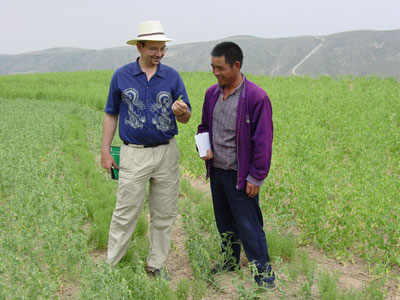 REAP-Canada takes great pride in being one of North America's most experienced agencies in sustainable biofuel research and development. REAP-Canada has been conducting research on agricultural biomass feedstocks as pelleted and briquetted biofuels for heat-related energy applications (Bioheat) since 1991. Studies have focused on switchgrass (Panicum virgatum), and have identified it to have great potential to thrive on marginal farmlands in North America, Europe, and China. REAP-Canada was the first agency in Canada to perform research studies on warm season perennial grasses as biomass energy crops and the first agency in the world to successfully pellet and burn switchgrass as a biofuel.
To be a leading think-tank on sustainable biofuels development and to provide direction for own research, REAP-Canada has published leading policy and life cycle research on biofuels sustainability. This includes estimates on the net energy gains and GHG emissions from the various biofuel options available in temperate regions of the world, and the cost efficiency of government biofuel incentives.
Agrarian Community Development
REAP-Canada has worked with rural agrarian communities to address the interrelated challenges faced by impoverished small farmers in developing nations through the implementation of the Agro-Ecological Village (AEV) Model. The AEV model emphasizes the creation of sustainable, holistic and integrated food and energy systems. It uses participatory methods to develop the social, technical and ecological infrastructure of communities. The model has been successfully implemented by REAP-Canada and its partners in the Philippines, China, and the Gambia.Modernizing Biofuel Use in Household Cooking
There is an increasing need to displace fossil fuels and unsustainable woodfuels used for household cooking to minimize the dependency on expensive fuels and reduce greenhouse gas emissions. REAP-Canada has been conducting research and promoting the use of sustainable agri-fuel sources and improved cooking technologies in rural communities to reduce household cooking costs and improve indoor air quality.An important innovation in sustainable cooking fuel use has been achieved by REAP-Canada through the development of an advanced clean burning household stove. Previous rice hull stoves have suffered from one or more design deficiencies. Through an intensive research and development program with local community partners and technical workshops, several innovations were made to create The Mayon Turbo Stove (MTS). This improved stove allows higher combustion efficiencies and produces a smokeless blue flame at the low cost of $15-20 USD per stove. The MTS has been distributed to over 5000 households in the Philippines and is currently being introduced to rural communities in pilot projects in many other developing nations.

