


REAP-Canada Funding Partners
REAP-Canada receives financial support from a variety of public and private entities. We would like to extend our gratitude to the following agencies that support us in our programming:Agricultural Co-Operative Development Initiative (AG-CDI)
AG-CDI supported REAP-Canada in the compilation of an annotated bibliography overviewing Sustainability in the Biofuels Industry. This project reviewed such topics as: food vs. fuel; net energy gains and production technologies; scale of production and farm cooperative involvement; and environmental standard for biofuels.Alberta Agriculture
Alberta Agriculture has supported REAP-Canada in a number of recent research projects. These studies include overviewing agri-fibre biomass quality and biomass resource availability for the province of Alberta and analysis of advances in pelleting/briquetting and combustion technologies for use with agri-fibre fuel sources.BIOCAP Canada Foundation
BIOCAP supported REAP-Canada in the assessment of renewable energy strategies emerging in Canada and the impact of government incentives on GHG mitigation. The main findings of the report, which compared green power generation from wind, biomass, and biogas and identified that switchgrass, wood and straw pellets displacing coal would allow the reduction of GHGs at a cost of about $25.00-$50.00 tonne - the least expensive farm derived options to reduce GHG emissions. The final copy of this report is available in REAP-Canada's on-line library.Canadian Environmental Network C.E.N.
REAP-Canada is a member of the Canadian Environmental Network (CEN) which provides support to environmental NGOs in Canada. Through the CEN, REAP staff and partners in developing countries have benefited from international development capacity building workshops in Nigeria, El Salvador, Guyana and Canada. In 1999, REAP-Canada was awarded the CIDA-Canadian Environmental Network International Environment Award for excellence in programming under the theme of Climate Change mitigation.Canadian Farm Business Management Council (CFBMC)
REAP-Canada was supported by the CFBMC to develop a resource directory and introductory bioenergy guide entitled "Bioenergy Options in Canada" a guide for farmers. It covers the basics on biogas, bioheat and liquid biofuel production and connects farmers to suppliers and other information sources. REAP-Canada also developed the CFBMC second edition guide "Introduction to Certified Organic Farming". REAP is frequently sponsored by CFMBC to provide technical seminars and agriwebinars. More information on these activities can be obtained at www.farmcentre.com and www.agriwebinar.com.Canadian Food Inspection Agency (CFIA)
With support from CFIA, REAP-Canada performed a study evaluating Commercial Energy Grass Production and Implications for Invasive Species in Canada. The project evaluated energy grass production on biodiversity, focusing on the impacts and potential risks of invasive species establishment and management in Canada. It also presented recommendations for agricultural production of energy grasses in Canada.Canadian International Development Agency (CIDA)
Through the Partnership and Bilateral Branches of CIDA, REAP-Canada has received financial supported since 1997 in our agrarian community development programs in rural villages in the Philippines, The Gambia and Senegal. CIDA's long-term support has been integral to the development of the Agro-Ecological Village Model and Mayon Turbo Stove implementation. CIDA has also provided support for REAP-Canada's International Internship program since 1999.
Conseil pour le développement de l’agriculture du Québec (CDAQ)
As part of the Canadian Agricultural Adaptation Program, CDAQ is supporting
REAP to develop six new breeding selections of switchgrass with improved
adaptation, yield and seedling emergence. This three-year breeding effort
will improve the commercial viability of switchgrass in Québec and the
agronomic performance and diversity of switchgrass cultivars available to
Québec farmers for utilization on marginal farmland. www.cdaq.qc.ca
Department of Foreign Affairs & International Trade (DFAIT) Canada
The Climate Change Division of the Deparment of Foreign Affairs & International Trade (DFAIT) Canada has facilitated REAP-Canada to implement the Cookstoves Lowering Emissions in the West African Region (CLEAR) Project in Senegal and The Gambia. Through their support the CLEAR project was able to distribute 4000 improved MTS and 2500 improved clay brick stoves in at least 40 communities in The Gambia and Sénégal. www.international.gc.ca
The David Suzuki Foundation
The David Suzuki Foundation is a non-profit organization which addresses environmental problems through research, application, and education programs and activities. REAP-Canada helped the David Suzuki Foundation produce a report which assessed the opportunities of using biomass as heating fuel in Ontario to promote the use of diversified renewable energy sources. The report entitled "Smart Generation: Powering Ontario with Renewable Energy" can be found in our on-line library or at the David Suzuki Foundation website.The NA Taylor Foundation
The NA Taylor Foundation is a donor agency that supports progressive environmental initiatives. It supports REAP-Canada 's development and distribution of the Mayon Turbo Stove in developing countries through an annual donation.
Tourism Industry Carbon Offset Service (TICOS)
The Tourism Industry Carbon Offset Service (TICOS) in the UK, is as an industry-wide programme to stimulate collective action by all travel and tourism businesses selling holidays, holiday services and air travel. TICOS uses offset funds to develop projecst that make both carbon savings and have wider sustainable development benefits. Since 2008, REAP-Canada has been supported by the Tourism Industry Carbon Offset Service (TICOS) to develop and distribute 1500 Mayon Turbo Stoves (MTS) to people in The Gambia. www.ticos.co.uk
Natural Resources Canada
Natural Resources Canada greatly assisted REAP-Canada by being our lead support agency in grass pellet development and in the commercial technology evaluation and development of switchgrass bioenergy feedstocks in Canada. In collaboration with McGill University, a number of PhD and MSc thesis projects were included in the activities including economic, agronomic and carbon storage and CO2 mitigation analysis.National Renewable Energy Laboratory and the United States Agency for International Development
The National Renewable Energy Laboratory (NREL) and the United States Agency for International Development (USAID) funded REAP-Canada in their analysis of utilizing biomass energy for household applications, co-generation, and sugarcane production in the Philippines. This has lead to the publication of the report on Strategies for Enhancing Biomass Energy Utilization in the Philippines".Ontario Ministry of Food and Rural Affairs (OMAFRA)
OMAFRA's Alternative Renewable Fuels Research and Development Fund supported the Optimization of Switchgrass Management for Commercial Fuel Pellet Production Project. The project examined actual switchgrass production costs on commercial farms in Ontario and assessing harvest techniques such as bulk and delayed harvesting and their impacts on fuel quality, combustion, costs and recoverable yields. Project partners include Nott Farms, Foley Farms, CANMET Combustion Laboratory and REAP-Canada. The final copy of this report is available in REAP-Canada's on-line library.Ontario Agricultural Adaptation Council
REAP-Canada in partnership with the University of Guelph has collaborated with the Ontario Agricultural Adaptation Council to perform agronomic and market studies on switchgrass as a new crop for Eastern Ontario. This has led to several innovative reports including "Assessment of switchgrass as an agri-fibre crop in eastern Ontario and "Switchgrass Fuel Pellet Production in Eastern Ontario: A Market Study".The Shell Foundation
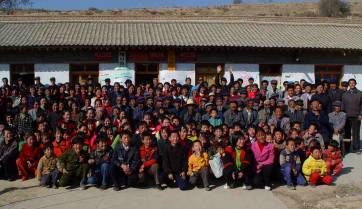
The Shell Foundation has facilitated REAP-Canada to partner with the Chinese Ministry of Water Resources in implementing the Agro-Ecological Village Model in Western China (in communities in Gansu province and Inner Mongolia). Through their support, the Western China AEV program is helping local farmers understand and utilize ecological farming methods as a means to increase prosperity while combating some of the worst soil erosion in the world.REAP-Canada Programming Partners
REAP-Canada works with progressive farmers organizations, non-profit organizations, corporations, and government agencies in China, the Philippines, and the Gambia to carry out bioenergy and rural development programs. We are pleased to be working with a number of partners committed to excellence in bioenergy and sustainable rural development:Chinese Partners:
Beijing Laowan Bio-energy Technology Co., Ltd.
 Beijing Laowan Bio-energy Technology Co., Ltd. (Laowan) and REAP-Canada are developing a strategy to introduce biomass feedstocks and briquettes and advanced biomass heating systems into the Chinese market. The biomass heating systems are to be used for space heating and process-heat applications and marketed to compete with coal-fired boilers to enhance China's energy security and reduce pollution. The project will create job opportunities for rural farmers by enabling them to market low value crop residues, perennial grasses and shrubs as energy feedstocks.
Chinese Administration Center for SeaBuckthorn Development (CACSD):
Department of Soil and Water Conservation, under the Division of the Ministry of Water Resources of the People's Republic of China - www.swcc.org.cn, www.icrts.orgThe Department of Soil and Water Conservation has been working for many years to develop sustainable initiatives to improve the severe environmental conditions facing China. The Department also accesses local, government resource people to provide assistance on localized economic development options, household energy systems and increasing farm production. The Western China Development Strategy (WCDS), designed and currently being implemented by the Chinese Bureau of Soil and Water Conservation is designed to reduce environmental degradation by developing environmental infrastructure with checkdams, contoured farming, and re-establishing vegetation such as seabuckthorn on degraded and vulnerable lands.
Gambian/Sénégalese Partners:
Njawara Agricultural Training Centre
 Established in 1990, the Njawara Agricultural Training Centre (NATC) is a community initiated and owned organization established by the Njawara community in the Gambia for the purpose of training youth and adult farmers in sustainable agro-forestry techniques so as to improve farm production and profitability while promoting sustainable natural resource management. They have a mandate to alleviate poverty in the North Bank Division of the Gambia; increase agricultural production and income in a sustainable way; and improve the balance of participation in agricultural to ensure a greater degree of gender equity.
Agency Village Support The Gambia (AVISU):
 (Previously known as Village Aid-The Gambia or VATG)
AVISU is the only Gambian NGO working in the impoverished Lower Saloum District of the Central River Division (CRD). Since 1991, AVISU has targeted the development of marginalized communities through integrated, self-supporting programs such as literacy circles, micro-financing, gender development and sustainable agriculture, including community gardens and appropriate technology development. They have also supported micro-projects in local communities such as water wells, bridges/culverts to rice fields, community run primary schools, and providing labour and time saving devices such as milling machines.
National Agricultural Research Institute
 The Gambia National Agricultural Research Institute (NARI) is the Gambia's principal agricultural research and development institute focusing on the advancement of livestock, horticulture, agronomy and agro-forestry systems. Their staff includes the leading agricultural and natural resource scientists in the country. NARI is presently developing its experience with participatory approaches for plant material improvement as a strategy to increase its impact in the country. It is also supporting the Participatory Learning and Action Research (PLAR) approach for rice improvement in the Gambia.
Association pour la promotion de la femme Sénégalaise (APROFES)
 Beginning as a community association in 1987, APROFES was certified as an NGO in 2002 and now has 15 full-time employees, over 40 volunteers and a training centre. APROFES offers training programs to increase the capacity of village members, women and organizations on topics such as financial management, agriculture/gardening, composting, agro-forestry, marketing, participatory planning and evaluations, fuel efficient stoves and micro-credit. Their current projects organise networks of villages in sharing information, trainings, micro-financing support and income generation.
Cadre Locale de Concertation des Organisation de Producteurs (CLCOP) - Wack Ngouna
Since its formation in 2002, the CLCOP-Wack Ngouna has supported the development needs of local producer organizations. It is a farmers alliance organization that provides services to support 75 members organizations representing 3500 farmers in the Nioro du Drip district (Kaolak Region). Its primary activities are to facilitate the development of small farmers organizations to accelerate agricultural development and capacity building in the region. CLCOP Wack Ngouna’s primary interests include strengthening farmers access to improving farming knowledge, supporting institution building processes of organizations, helping farmers access appropriate tools and seeds for local conditions and working to support the needs of women farmers.Philippine Partners:
University of the Philippines at Los Banos (UPLB)
The Philippines was an early innovator in the advancement of sustainable agriculture research and training in the mid 1980's in developing countries. In 1997, REAP-Canada began partnership activities with leading UPLB sustainable agriculture research scientists. This has helped enable advances in the research and field implementation of diversified farming systems and crop improvement in ecological sugar cane and rice production in the country.Pambansang Inisyatibo sa Binhi at Likas Kayang Pagsasaka sa Pilipinas (PABINHI-Pilipinas)
 PABINHI is a farmer-led/scientist assisted network strengthening local initiatives on local management and control of agricultural production systems. It is an alliance consisting of Farmer/People's Organizations from 11 provinces, a technical resource pool comprised of natural and social scientists, NGOs and like-minded individuals who have been involved in the implementation of sustainable agriculture projects for many years. Innovative activities of PABINHI include farmer led plant breeding and adaptability trials and Bokashi organic fertilizer production.
Sustainable Rural Enterprise (SRE)/Aklan State University (ASU)
Sustainable Rural Enterprise (SRE), an Aklan State University based non-government organization (NGO), is pioneering renewable energy-based rural enterprise development projects. SRE's mission is to enhance the efficiency, effectiveness, growth, and profitability of rural farming and fishing enterprises through the increased application of productive uses of renewable energy. They have worked with REAP since 2002 to test, manufacture and distribute the Mayon Turbo Stove.Canadian Partners:
Nova Scotia Agricultural College (NSAC)
The NSAC is an academic institution committed to agricultural development around the world. REAP-Canada has partnered with NSAC to deliver technical trainings to farmers in rural Gambia and Senegal through the Gaining Ground in Gambia and Seénégal (GGIGS) project funded by CIDA. Technical experts from NSAC will contribute their extensive experience in sustainable livestock production, low-input fodder production, and soil and nutrient management to the project trainings and on-farm research program.